
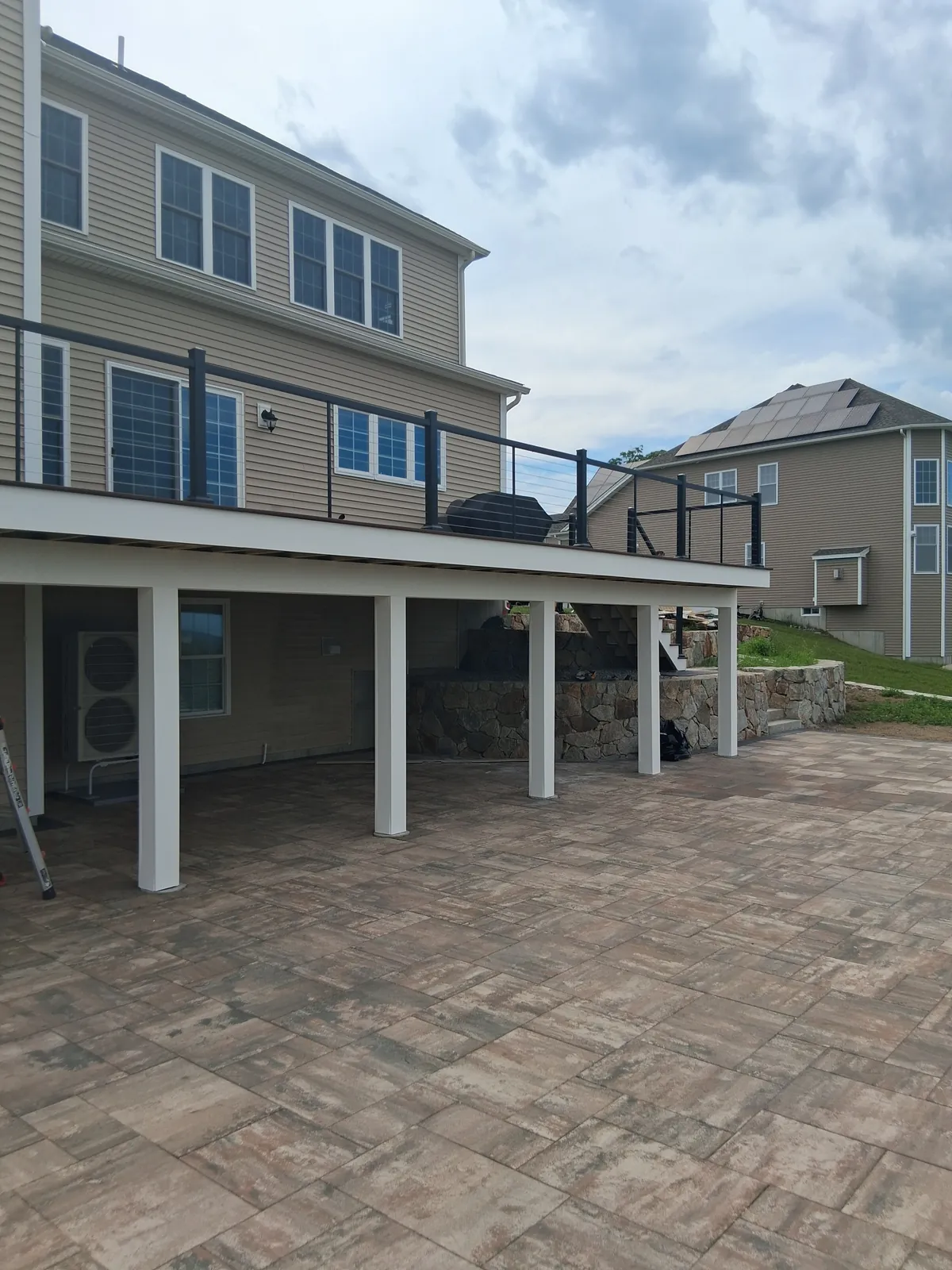
A pool deck has one job most people forget until August: it has to be walkable barefoot. Everything else, looks, drainage, longevity, matters too, but if the surface burns feet at 2pm nobody uses the pool. Here is how the common options actually perform in Florida sun.
Why some surfaces get so hot
Two things drive surface temperature. Color is the obvious one, since dark surfaces absorb more sun. The less obvious one is density. Dense, solid materials store heat and hold it, while porous materials shed it faster and cool down quicker once shade hits.
That is why a light colored porous paver can be twenty degrees cooler than a dark solid slab sitting in the same sun. It is also why the sample in your hand tells you nothing. What matters is that material, in that color, in your yard.
Concrete pavers
Pavers are the workhorse. Light colors stay reasonably cool, the joints give the surface texture so it is not slick when wet, and if a section settles or stains you pull those pavers and reset them instead of tearing out a slab.
The part that decides how long they last is the base. Our clay-heavy soil holds water, so a properly compacted base with the right depth is not optional. Skip it and you get waves and lipped edges within a couple of seasons.
Travertine
Travertine is the coolest common surface, and it is not close. It is naturally porous, it comes in light tones, and it feels good underfoot even in the middle of the afternoon.
It costs more than pavers, and the same porosity that keeps it cool means it will absorb spills and pool chemicals if it is left unsealed. Seal it, keep the sealer up, and it is hard to beat around a pool.
Cool deck coatings over concrete
If you already have a sound concrete deck that is just ugly and hot, a textured acrylic coating is the cheapest real improvement available. It knocks the surface temperature down noticeably and adds grip.
It is a coating, though. It does not fix cracks, it does not fix drainage, and it will need recoating in several years. If the slab underneath is broken or holding water, put the money into replacing it instead.
Composite decking around a pool
Composite works well for raised pool decks and for above ground pools where you need a framed structure anyway. It will not splinter, chlorine does not bother it, and it never needs sealing.
Watch the color. Dark composite in full sun gets hot enough to be a problem barefoot. Stick to light tones near water, and keep the framing hardware corrosion resistant since it will get splashed constantly.
What to check before you commit
- Walk a real installed sample in full sun, not a showroom board.
- Confirm slip resistance when the surface is wet, since that is the normal state.
- Ask where water drains, away from the house and away from the pool coping.
- Check that the base or slab prep is spelled out in the quote.
- Match the color to the house and the pool tile, not just to a catalog.
- Plan for expansion joints so the surface can move without cracking.
- Decide on sealing now, and budget for keeping it up.
Drainage is half the job
Around a pool you have splash out, rain, and backwash all hitting the same surface. The deck has to shed all of it away from the house and away from the pool structure.
That means the right slope, joints in the right places, and sometimes a drain line where the grade fights you. It is invisible work that decides whether you have a puddle at the back door every time it rains.
Coping, edges, and safety
The coping is the cap right at the pool edge, and it takes the most abuse of anything on the deck. It needs a bullnose or rounded edge so nobody scrapes a shin, and it needs to be set so water runs away from the pool rather than back into it.
Slip resistance matters most in that first three feet, since that is where wet feet land. Textured pavers, tumbled travertine, or a textured coating all give you grip there. Smooth polished surfaces near a pool are a bad idea no matter how good they look dry.
If you have a raised deck or a change in level anywhere, code will likely require railings or a barrier. It is easier to design that in from the start than to add it after the fact, and it looks a lot better when it is planned.
Living with it
Pool chemistry is hard on stone and grout. Rinsing the deck occasionally, especially after shocking the pool, keeps chlorine from sitting on the surface and slowly bleaching or etching it.
Keep an eye on joint sand in a paver deck. Splash out washes it away over time, and refilling with polymeric sand every few years keeps the units locked together and keeps weeds out of the joints.
For sealed surfaces like travertine, plan on resealing every few years. You will notice when it is due, since water stops beading and starts soaking in. It is a one day job and it protects a surface that cost a lot more than the sealer.
Getting it built right
Pool decks take more abuse than any other outdoor surface we build. Sun, chlorine, constant foot traffic, and furniture getting dragged around. Materials that hold up and a base that does not move are what separate a deck you enjoy from one you redo in five years.
See what we do on our pool deck page, or look at the patio surfaces we install if the project extends past the pool area. When you are ready for numbers, contact us and we will come measure.
Looking for Pool Deck in Tallahassee, FL? Learn more about our Pool Deck service or get in touch directly.