
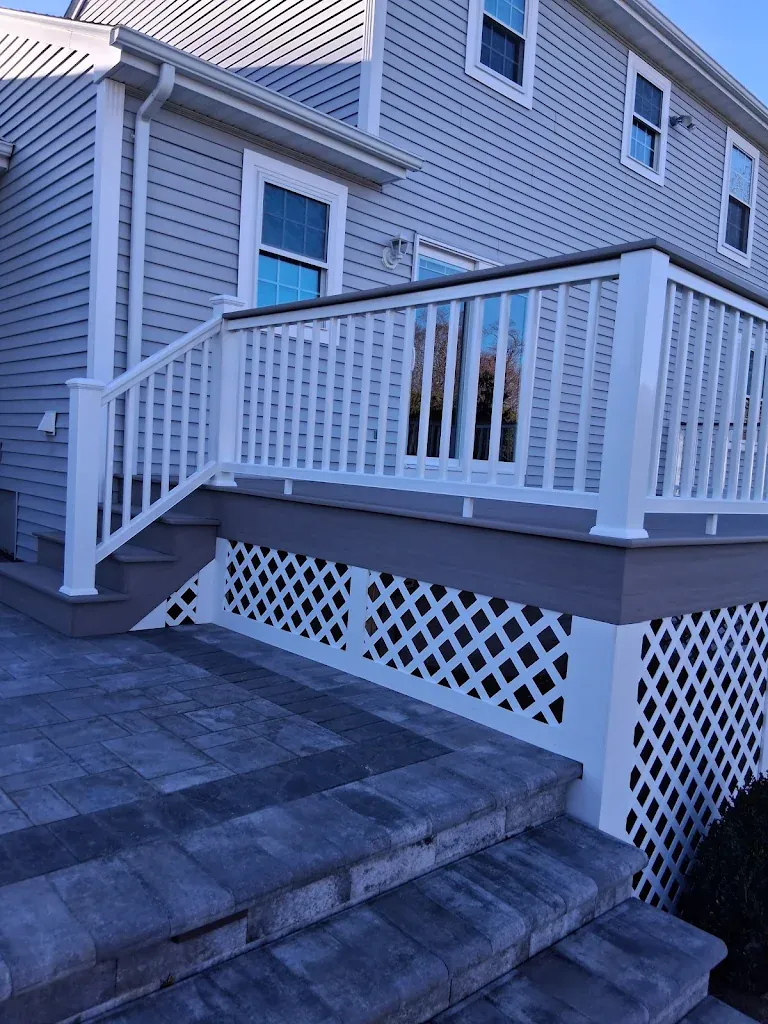
Most people pick a decking material off a display board in a store. The board looks great under showroom lights. Then it spends a Tallahassee July outside, takes an afternoon thunderstorm every day for two months, and starts telling you the truth. After fifteen years of building outdoor spaces in Tallahassee, Florida, here is what we actually see happen to each material once it lives here.
What our climate does to a deck
North Florida is humid almost all year. That moisture never really leaves the wood, so anything that can rot or grow mildew will try to. On top of that we get hard, fast rain in the summer, then long stretches of direct sun in the high 90s. Boards expand, contract, and cup.
The other thing people underestimate is our tree cover. Live oaks and pines drop debris constantly, and shaded decks stay damp far longer than sunny ones. A deck in a shaded backyard near a canopy road ages very differently than one on an open lot.
Pressure treated pine
Treated pine is still the most common deck material around here, and for good reason. It costs the least up front, it is easy to work with, and the treatment holds off rot and termites for a long time.
The catch is movement and maintenance. Pine that shows up wet from the yard will shrink as it dries, so gaps open up and some boards cup or twist. You also need to clean and reseal it every couple of years, otherwise the surface goes gray and starts to splinter. If you are fine with that upkeep, treated pine is honest value.
Composite and PVC
Composite boards are wood fiber and plastic pressed together. PVC boards skip the wood entirely. Both resist rot, both shrug off mildew better than real wood, and neither one needs sanding or sealing. For a lot of Tallahassee homeowners that alone makes the decision.
Two things to watch. First, heat. Dark composite in full afternoon sun gets hot enough that you will not want bare feet on it. Lighter colors and PVC run cooler. Second, framing. Composite is not structural, so the frame underneath still has to be built right, with proper joist spacing and hardware rated for our humidity.
We are trained in all the major decking products, so when we spec a composite we are picking it for your specific yard, sun exposure, and budget rather than pushing one brand.
Hardwood
Ipe, cumaru, and similar tropical hardwoods are dense enough to resist rot and insects on their own. They look excellent, they last a long time, and they stay cooler than most dark composites.
They also cost more, they are heavy, and they need stainless or coated fasteners and pre drilled holes. If you want the natural brown color to stay, plan on oiling once a year. Let it go and it weathers to silver gray, which some people prefer anyway.
A short checklist before you choose
- How much sun does the deck area get between noon and 5pm in summer?
- Is the spot under trees, and how much debris will land on it?
- Are you willing to clean and reseal every year or two, honestly?
- Will bare feet or pets be on it, which pushes you toward cooler surfaces?
- What is the height off the ground, since taller decks mean more framing cost?
- Do you want the deck to match existing trim, siding, or a pool surround?
Answer those six and the material usually picks itself. When people get stuck, it is almost always because they are weighing up front price against maintenance they have not thought through yet.
The parts nobody sees
The boards are the part you look at. The frame is the part that decides how long the deck lasts. Joist spacing, flashing where the ledger meets the house, hardware that will not corrode in humid air, and proper drainage under the structure all matter more than the brand printed on the board.
We draw every project before we build it, so the framing plan, the material list, and the price all match. If you want to see the range of what we build, the decks we build in Tallahassee page walks through the options, and our Tallahassee service area page covers the neighborhoods we work in most.
Cost, in plain terms
Treated pine is the lowest first cost and the highest ongoing cost. Composite sits in the middle up front and near zero after. Hardwood is the highest up front and moderate after, since oiling is the only real chore.
Spread over ten years the three get much closer than the sticker price suggests. That is the math worth doing before you decide, and it is a conversation we are happy to have at your house with the actual yard in front of us.
Railings, stairs, and the details that age
Deck boards get all the attention, but railings and stairs are what people touch every day, and they are usually the first parts to loosen up. Cable and aluminum systems hold their alignment better than wood pickets in our humidity, since wood posts twist as they dry out.
Stairs deserve real thought too. Consistent riser heights, a solid landing, and treads that drain instead of holding water will keep the whole structure safe for a lot longer. If the stairs land on dirt or mulch, we set them on a pad so the stringers are not sitting in wet ground.
Fasteners are the other quiet detail. Hidden clips give you a clean surface with no screw heads, but they need the right joist spacing to work properly. Face screwing is simpler and easier to service later. Neither is wrong; they are just different trade-offs, and it is worth deciding before the frame goes up rather than after.
Keeping it looking good
Whatever you build, a yearly wash does most of the work. Pollen in spring and leaf litter in fall are what feed mildew, so clearing debris out of the gaps between boards matters more than any product you can buy.
For treated pine, plan on cleaning and resealing every one to two years depending on sun exposure. For composite, soap, water, and a soft brush handle almost everything, and a pressure washer on a low setting is fine if you keep the tip moving. For hardwood, one coat of oil a year keeps the color, or you can let it silver out and just wash it.
None of that takes a weekend. It is a couple of hours, twice a year, and it is the difference between a deck that looks five years old at fifteen and one that looks fifteen at five.
Ready to talk it through?
Come at it from how you will use the space, not from a product name. Tell us where the sun hits, where you want to put a grill or a table, and what you want it to look like from inside the house. We will handle the rest, from the drawings to the last board.
Give us a call or get in touch through our contact page and we will come walk the space with you.
Looking for Decks in Tallahassee, FL? Learn more about our Decks service or get in touch directly.